Search This Blog

I am a quilter living in Woodbridge, Suffolk who has made quilts since I was a teenager. I also ring bells! Both are great British traditions....I will try to feature some of my antique Welsh and Durham quilts, the quilts I make myself, my quilting activities and also some of my bellringing achievements. Plus as many photos as I can manage. NB: Double click on the photos to see greater detail, then use back button to return to the main page.


Sunday, 23 February 2014

Gt Livermere and Bury St Edmunds

Today's walk was at Gt Livermere, Suffolk, a small village not far from Bury St Edmunds. Mike had agreed to ring a quarter peal of Erin Caters at Bury, so we set off early for a short walk.


The church at Gt Livermere is one that I had not visited before, as it has no bells....but is a charming country church. Note the thatched roof and the tower with a wooden belfry roof.


Inside, a sign commemorates the grave of William Sakings, the King's forkner (falconer). Serving three Kings, this was an important and well paid job.


We walked down to a small reservoir, full of swans, geese and ducks at this time of year. On the far side, in a farmyard, could be seen the ruins of St Peter and St. Paul, Little Livermere. Suffolk and Norfolk were prime farming areas, and before mechanisation, would have been very densely settled, with many more inhabitants than now. This church was abandoned in the early 20th century. Some of its contents are to be seen in other local churches.


Then it was off to Bury St Edmunds, six miles away. The cathedral has a detached bell tower, the Norman Tower. This is considered to be one of the best remaining examples of Norman architecture, similar in age to the Tower of London. It was built by Abbot Anselm between 1120 and 1148.


 Before the Dissolution of the Monasteries during Henry VIII's reign, there was a very prosperous Benedictine Abbey here. housing the shrine of St Edmund.....these houses are very elegant, and have been built in the ruins.


The bells were formerly a ring of 10 by Thomas Osborne, but were recently augmented to 12. A large ringing room with a massive ring beam. The quarter was Erin Caters and was intended as a practice for the Ridgeman trophy, a ten bell ringing contest,to be held later this year.


On Saturday night, we had our annual Pettistree dinner at the Froize Inn, Chillesford near Orford. I now have another item to put beside my cup for Hand Applique - Mary's bellringing plate, an award made annually for contribution/effort to ringing at Pettistree.

Monday, 17 February 2014

Brown and Pink Welsh Quilt - Rhayader

Here is a Welsh quilt, which was bought many years ago from a house clearance in Rhayader, midWales. It had been stored and never used, as intended, in a B &B. This quilt is a good example of one made by a local quilter or by a farm wife. The patterns are different to any of my other Welsh quilts, but of course, the variety seen is one of their hallmarks...


The quilt is made in a rather thin, silky artificial fibre. The gold side is in good condition, but the pink side has some patches where there is thinning. The pattern is a bit hard to make out here, but the centre  is hearts forming a flower, surrounded by several straight lines forming a square. The use of several lines, five here, has a nice effect. This is followed by a border of flowers and leaves, then square infill.


Another photo of the centre...rather lumpy, I was wondering why....


The pink side, stitching is a bit easier to see here..the fabric is "shot" ie has a gold cast in some lights. The outer borders are an Interesting use of fans which I had not seen before....


A border of fans with another square motif in the corner...


Another look at that fan design, with a flower in the intersections...

The gold side.....the edges of this quilt are hand sewn. Size is about 80 x 82 inches. 

I had wondered why the quilt looked a bit puckered, especially in the centre. Usually these Welsh quilts have either lambs wool or a single worn blanket inside them. When I held this up to the light, I could see that the filling was a real patchwork of wool offcuts ..some light, some dark, some big some small, and some lightweight and some heavy. No wonder this quilt had shrunk unevenly when it was washed! A quilt that reflects the mend and make do attitude of the day....

Sunday, 9 February 2014

Strippy Quilt from Ashington, Northumberland

Here is a strippy quilt from Northumberland, an area that was well known for its quilters. This quilt has the cheerful red strips, but instead of white, these are teamed with a nice apricot color.


The quilt measures 77x 68 inches. June says that this quilt came from clearing her aunts house. The aunt was Ethel Sudlow from Ashington, and Ethel had inherited it from a relative. This quilt is a prime example of what I would call a club quilt. Nicely made, but nothing fancy!


Nonetheless, the quilting patterns are very attractive ...a running feather, a twist, a four petalled design, some hammocks and a flower in a square. The material is cotton sateen.


The quilting is nicely done, and was probably made by a quilter running a quilt club.

The ends are worn, as the ends at the top and bottom receive the most wear. Someone in the past has machine stitched some ribbon along either end. The quilt was finished with two lines of machine stitching.

Monday, 3 February 2014

Colouring the Nation


Here is a new book...Colouring the Nation: The Turkey Red Printed Cotton Industry in Scotland 1840-1940 By S Nemadic and S Tuckett. It is published by the National Museums, Scotland, price £17.99.


This book resulted from a two year project to catalogue the museum's collection of some 200 Turkey Red Pattern books - rare survivals which contain some 40,000 samples of the industry's output. The sample books themselves are in a fragile state and thus not available to researchers, so this book is very welcome. 

Turkey Red was a complex process, but produced a red fabric which was bright coloured and did not fade. Although there was a domestic market for the fabric, much of the output was exported, and the cloth had to be carefully tailored to the taste of various  overseas markets. These fabrics of course were not seen in British quilts, so the samples shown are of interest. 

History has tended to ignore the importance of textiles in British history - but Scotland vied with England in Turkey Red cloth printing and production of cotton goods, and employed thousands along the River Clyde and in the Vale of Leven. 

This book has a readable content and is illustrated with some colourful and nicely detailed photos. Books on fabric are few, so it is a delight to have such an attractive addition to my meagre library. The book is available online at www.shops.nms.ac.uk or from Amazon or The Book Depository. Highly recommended!

Friday, 31 January 2014

Red Paisley Throw

Well, I cannot resist a nice red paisley throw! This one is in good condition, and the fabric retains much of its original colours. This throw came from Edinburgh, so I am pretty confident that the fabric came from one of the large fabric mills in the Vale of Leven near Glasgow (see the recent book "Colouring the Nation" for many more details).


Like most of these throws, it was quickly made from lengths of fabric covering a woollen filling.


Corners are not very carefully done....


Again, quickly made.....on the sewing machine...


The colours are still very vibrant, with much of the original green yellow and blue showing...these disappear as the fabric becomes more worn, but the red is very long lasting...


The paisley or boteh shape....no other provenance...size is about 135 x 166 cm.

Sunday, 26 January 2014

Christmas is over - back to work!

I'm sorry that I haven't posted in over a month - things got rather busy over Christmas. It is also the tax year end for many of the companies that I do bookkeeping for....so lots to do.


In the week before Christmas, there were several company Christmas meals to enjoy - this one was at the Salthouse Harbour Hotel - the food was great here and I enjoyed my lunch with the small group of people I work with in Ipswich two days a week.


There was also a lunch  at Hintlesham Hall, a well known restaurant and hotel with another of my companies. We had party games, a contest for a bottle of champagne (no I didn't win) and small gifts at the finish. A very pleasant day.


Christmas is a busy time for bellringers, as we are much in demand, and have to hurry around to do lots of ringing for Carol Services, etc. Here is the Pettistree band ringing at St Matthews church in Ipswich, for the Christmas ringing. All the churches in Ipswich are rung for half an hour on the last Saturday before Christmas, before we all repair to St Margaret's Church for coffee and mince pies.


We were also able to help the Clopton ringers ring for a service - their first time to ring for a service, as these people have only started to learn. That's David in the centre, who is teaching the band. Susan Schurr's daughter Jenny on the right is also learning to ring. Susan was very keen about bellringing and, having started to ring at the age of 70 for the Millennium, achieved a great deal in her lifetime. I'm sure that she would be thrilled to see that Jenny is learning to ring.

Well, its back to work now.....but the good news is that Mike and I have booked our tickets to visit Sophie and Paul in Singapore in March. We are considering where else to go - Kuala Lumpur and Malacca seem an easy option. Not long to go now!

Best Wishes for 2014

Tuesday, 17 December 2013

Muriel Rose - A Modern Crafts Legacy

When I was last in York in October, I had a browse in the Quilters Guild Library. One item that I discovered was a small booklet about Muriel Rose. I thought that it would be an easy matter to find a copy of this booklet - but found, on ringing the Crafts Study Centre, that all stocks had been sold and that it was now out of print.


So I was very pleased to find that this collection of essays is available on-line at:

http://issuu.com/studiohyde/docs/murielrose


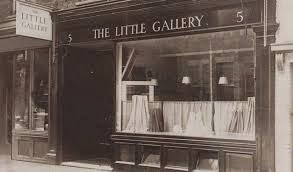
Muriel Rose was director of The Little Gallery, where she selected what she considered the best of contemporary craft for sale. The Little Gallery "made an active and forceful contribution to the way that craft work was distributed and debated in the modern world".


The Little Gallery was at 5 Ellis Street, off Sloane Street in London. It opened in 1928 and closed in 1939.
We quilters know her best for her work with Mavis FitzRandolph to commission high quality quilts in Durham and Wales, via the Rural Industries Board, which were then sold in London.

I found this a very interesting collection to read, and will be keeping a copy for my research - maybe one day I will find an actual booklet...