Search This Blog

I am a quilter living in Woodbridge, Suffolk who has made quilts since I was a teenager. I also ring bells! Both are great British traditions....I will try to feature some of my antique Welsh and Durham quilts, the quilts I make myself, my quilting activities and also some of my bellringing achievements. Plus as many photos as I can manage. NB: Double click on the photos to see greater detail, then use back button to return to the main page.


Tuesday, 17 December 2013

Muriel Rose - A Modern Crafts Legacy

When I was last in York in October, I had a browse in the Quilters Guild Library. One item that I discovered was a small booklet about Muriel Rose. I thought that it would be an easy matter to find a copy of this booklet - but found, on ringing the Crafts Study Centre, that all stocks had been sold and that it was now out of print.


So I was very pleased to find that this collection of essays is available on-line at:

http://issuu.com/studiohyde/docs/murielrose


Muriel Rose was director of The Little Gallery, where she selected what she considered the best of contemporary craft for sale. The Little Gallery "made an active and forceful contribution to the way that craft work was distributed and debated in the modern world".
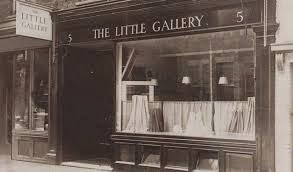

The Little Gallery was at 5 Ellis Street, off Sloane Street in London. It opened in 1928 and closed in 1939.
We quilters know her best for her work with Mavis FitzRandolph to commission high quality quilts in Durham and Wales, via the Rural Industries Board, which were then sold in London.

I found this a very interesting collection to read, and will be keeping a copy for my research - maybe one day I will find an actual booklet...

Tuesday, 10 December 2013

Small Red Welsh Quilt

Here is another Welsh quilt that I purchased last month. It is a small quilt, not even a single size. It looks as if it is a large crib quilt. The size is 39 x 51 inches or 99cm x 125cm.


The designs are simple, to fit into the smaller area. However, the quilting is of a good standard and the leaf patterns are very attractive. The double and triple lines really make the motifs stand out well.


You can see that there is a central motif of leaves - a cross hatched area and a border of leaves complete the design.

The backing is of a tan colour. The wadding seems to be lambs wool.


The edges are neatly finished off by hand. Some of the quilting lines have "popped" and are gone...but still in relatively good condition. This type of quilting does epitomize Welsh quilting for me...

Wednesday, 4 December 2013

Egyptian Work - Two Panels

Here are two small panels of Egyptian tent work that I bought recently. Like many attending the Festival of Quilts, I was fascinated to see the tentmakers of Cairo at work and admired the larger textiles that they produced. These small items are likely to have been brought back as a small souvenir by a tourist to Egypt. The background is a heavy canvas. They are panels, and have not been made up into cushions. They are a bit faded, so perhaps they were simply displayed in a house....


Obvious Egyptian references here, with a mule driver and his animal, with two pyramids in the background. Some pencil marks are visible as a rough guide for the maker. The blue pack on the back of the mule has come unstitched.


The other block has an active scene of a chariot driver with his horse. The colours may be a bit faded with this panel....but very appealing colours......The backing fabric is coarse and the stitching professional, in that the stitching is not fine, but holds everything in place in an economical fashion.

I enjoy these panels, and they will go well with the South American molas that I already have....

Wednesday, 27 November 2013

Quilted Welsh Bed Jacket

Having bought the 1930's North Country bed jacket from Jen Jones, I was surprised to see another listed by Louise Bell of Builth Wells in Wales.This item is of a similar age, but is constructed differently, with a thinner, silkier fabric and a different style of quilting. The colours are more gentle and there is a most attractive two tone ruffle on the neck.


You can see that the jacket is blue on the outside and has a pink lining. Its in good condition, but has been well used, with wear to be seen in one or two areas (but nothing too major).


The quilting is a straight grid, with some double lined roses and leaves on a vine down either side of the front.


The back is plainly quilted with a grid. The stitching is neatly done....


There is little wadding and the jacket is lightweight. The outer pieces have been sewn together on the machine, and then the inner seams slip stitched in place by hand. A bit different to the last bed jacket where the seams were hand sewn together through all layers and then the edges slip stitched down....no piping to the edges, here...


Here, rather than a ribbon tie, the closure is a matching fabric loop and a pretty mother of pearl button. The edges are all neatly hand sewn in the Welsh fashion.


The neck ruffle is very feminine and would have taken some skill to achieve. This item has no provenance, but was bought in Carmarthen. Between and after the wars, many items were made to be used around the house, or to be given away as gifts. Large quilts were not often made although there were some quilting classes run by groups like the WI.

An interesting addition to the collection!

Thursday, 21 November 2013

North Country Bed Jacket - RIB??

Here is a small item that I recently bought from Jen Jones - it is a bed jacket. Smaller items became popular between and after the two wars, and many ladies went to sewing classes where beautiful small items were made for use around the house.


This bed jacket was made by a sewer called A Woods who lived in Cumbria. Mrs Woods was a sewing teacher. This item dates from the Rural Industries Board era, although we don't know if Mrs Woods was involved in that. Jen will be keeping some other items that came with this item and other textiles -- pincushions and folders of teaching materials. The jacket is well made and features north country quilting designs with a tie closure.


Large feathers and also daisies are used on the back.


The quilting is good, but not outstanding - but Mrs Woods may not have been solely a quilter, she probably taught all manner of embroidery and knitting skills....


The edges are neatly finished with piping, and at the seams, the edges are bound before being sewn together.
A very interesting item, and a good addition to the quilts. As you know, I am very interested in the RIB period, and would love to have an  item that was definitely RIB! Quite by accident, I saw (and bought) another bed jacket from Wales of a similar date, which I'll show in another post - although made in Wales, the other bed jacket also has north country patterns, so perhaps there were commercial patterns available at this time.

Monday, 18 November 2013

Its All in the Making Catalogue

While I was at the Quilt Museum, York, before the seminar started, I bought the catalogue of our BQSG-arranged exhibition, It's All in the Making. I was very impressed - it is attractive, well written and reflects the effort and time spent by our members.


Here's the cover - the price is £12.50 and it is available online from the Quilt Museum, 


The items in the exhibition are all nicely illustrated, with full information.


On display is the replica 1712 quilt. The original quilt is too fragile to display.

 There are also four interesting essays on the four strands of the exhibition - commemoration, sharing, utility and earning money. I am pleased to have been involved, even if only a small way.

Friday, 15 November 2013

Pink and Tan North Country Strippy

Here is a quilt that I bought last month - it is a nicely made North Country Strippy. These were the "everyday" quilts - and many were made as "Club" quilts, where for a subscription of a shilling or two over twenty weeks, you had a quilt made for you by a local quilter. It was a good way to afford what was an expensive purchase, while supporting a local woman and her family. Many women had little to live on after mine accidents or other calamities.


This quilt is nicely stitched and is better made than many; many have sparse stitching, as the quilts had to be produced in little over a week. Strippy colours are often red and white or blue and white - this one is made with a pale pink and a tan or beige cloth. the colours in the last photograph are the most realistic.


A closer look at the quilting patterns, which follow the strips, as is usual. There is a running feather, a rose in a square, and a fancy twist pattern.


The edges are, of course, finished with a knife or butt edge. Many of you may remember "the edge" that Pauline Adams discovered where one edge is seamed together before the quilt is put in the frame. This treatment, though unrecorded in the literature, seems to have been surprisingly common. Both of my Hawick quilts have this treatment, as does this quilt. You might be able to see that the two edges look different in the photo. The lower one is where the edges have been seamed together. There is no need for a line of machine stitching, and the wadding does not really reach the edge. This method made it easier for the quilter, as  one edge was already complete and did not have to be finished off. It also was economical of cloth and made it easier to put the quilt in the frame.


A closer look at the quilting patterns. This quilt is fairly large at 78 x 95 inches. The reverse is a plain pink fabric. This quilt came from the seller's grandmother, but as Granny had been raised in Hertfordshire, is unlikely have been connected with her or her family. She did like to go to auctions and sales, and is likely to have picked up the quilt at one of these. All the seller knew was that the quilt had been in the family for a long time.


A nice Durham quilt for the collection - I took it to a pensioners' group in Felixstowe yesterday afternoon, where it and the other quilts were much admired. A few had memories of quilts, but most did not, as East Anglia has no tradition of quilts. Eiderdowns seem to have been the usual bed covering here.

An extra 15 or 20 people (non-members) had turned out, so quilts obviously touch a nerve at the moment, and are of interest. I was also closely questioned about my bookkeeping work by some parents whose daughter wants to change career!  I think many people worry about finding sufficient work at the moment.